
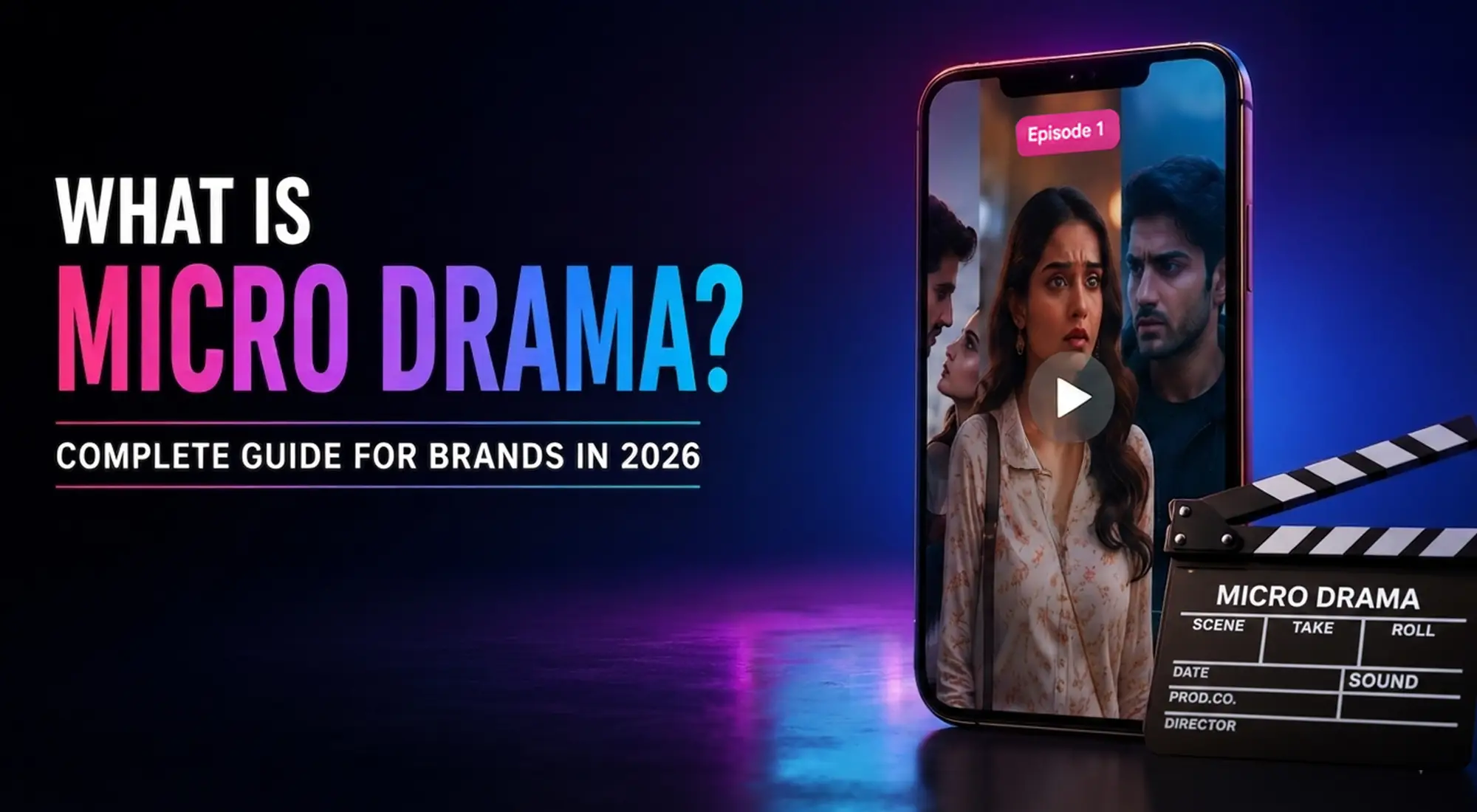
If you’ve spent any time scrolling Instagram Reels or TikTok in the last year, you’ve probably stumbled across a vertical video that looks like a soap opera crammed into 90 seconds – a dramatic confrontation, a shocking reveal, a cliffhanger, and then… “Watch Episode 2.” It’s a micro drama, and it has quietly become one of the fastest-growing content formats in the world.
By 2025, the global micro drama industry was generating close to $11 billion in revenue – nearly double the size of the entire FAST (free ad-supported streaming) channel ecosystem, according to industry researcher Omdia. In the US alone, micro drama revenue crossed $819 million in 2024 and is projected to hit $3.8 billion by 2030, per Variety. In India, the market is following the same trajectory, with estimates putting it at roughly $300 million in 2024 and on track to reach $4.5 billion by 2030, according to Lumikai.
Brands have noticed. Maybelline, Crocs, Starbucks, and MCoBeauty have all launched their own micro drama series in the last year, and the list is growing every month. This guide breaks down exactly what micro drama is, why it works, and how your brand can get started – without wasting budget chasing a trend you don’t fully understand.
______________________________________________________________________________
What is Micro Drama?
Micro drama (sometimes called “micro-drama,” “vertical drama,” or “short drama”) is a genre of episodic, serialized video content built specifically for mobile phones. Each episode typically runs 60 to 180 seconds, shot in vertical (9:16) format, and a full series can run anywhere from 5 episodes to over 100.
The storytelling itself borrows heavily from soap operas and telenovelas: love triangles, secret identities, revenge arcs, rags-to-riches transformations. Every episode ends on a cliffhanger designed to make the viewer tap “next” immediately, the same psychological hook that powers binge-watching on Netflix, just compressed into a fraction of the time.
Platforms like ReelShort, DramaBox, and ShortMax popularized the format globally, while in India, players like Kuku TV, Balaji Telefilms’ Kutingg, and Amazon’s MX Fatafat have built large local audiences around Hindi-first storytelling. For brands, the term “micro drama” now also refers to branded versions of this format – short, serialized fictional stories built around a product, character, or brand world, distributed on social platforms or drama apps rather than traditional ads.
______________________________________________________________________________
Evolution of Digital Content: From Ads to Storytelling
To understand why micro drama is resonating now, it helps to look at how digital content has evolved:
- The banner ad era – Static, interruptive, and increasingly ignored. Click-through rates on display ads have hovered near 0.05% for years.
- The pre-roll and skippable ad era – Brands tried to insert themselves into content people already wanted to watch, usually with a “Skip Ad” button waiting five seconds away.
- The influencer and branded content era – Brands moved from interrupting content to sponsoring it, borrowing a creator’s trust and audience.
- The micro drama era – Brands stop borrowing attention and start earning it, by becoming the entertainment itself.
This last shift matters because consumer tolerance for being advertised has collapsed, while appetite for short, addictive, story-driven video has exploded. Micro drama sits exactly at that intersection: it’s not an ad interrupting a story, it is the story, with the brand woven into the plot rather than bolted onto the end of it.
______________________________________________________________________________
Key Features of Micro Drama
Short Episodes
Episodes run 60–180 seconds, built to be consumed in a single scroll session – waiting in line, on a commute, during a break. There’s no 20-minute setup before the payoff; the hook lands in the first five seconds.
Episodic Storytelling
Unlike a single 60-second ad, micro-dramas unfold across multiple episodes, usually 5 to 15 for branded content (true entertainment-platform dramas can run into the hundreds). Each episode ends on a cliffhanger, which does two things for a brand: it drives repeat engagement, and it keeps the audience in the story – and near the product – for far longer than a single ad ever could.
Mobile-First, Vertical Video
Every frame is shot and edited for a phone held upright, with no letterboxing and no wasted real estate. This isn’t a TV ad resized for mobile; it’s built for the format from the first shot, which is a big part of why it doesn’t feel like advertising to the viewer.
Why Brands are Investing in Micro Drama
Several forces are converging at once:
- Attention is fragmenting, but the story still works. People skip ads in seconds but will binge 20 episodes of a drama in one sitting. Micro drama channels that same completion behavior toward a brand narrative.
- Production costs are falling. Full micro drama series can be produced for a fraction of traditional TV or film budgets – production costs for an entire show can range from roughly $30,000 to a few hundred thousand dollars, compared to tens of millions of dollars per episode for prestige television.
- It fits how younger, mobile-first audiences already behave. Gen Z and younger millennials already treat vertical video as their default entertainment format; brands are meeting them where they already are, rather than asking them to change behavior.
- The format rewards creator-brand relationships. Brands with existing creator partnerships can cast familiar faces as leads, importing an audience’s trust in the creator directly into the brand story.
- It builds an owned content asset. Unlike a media buy that disappears the moment the budget stops, a micro drama series lives on as an owned property on YouTube, Instagram, or a brand’s own channels – reusable, clippable, and repurposable long after launch.
______________________________________________________________________________
______________________________________________________________________________
Real Examples of Micro Drama Campaigns
- Crocs × ReelShort – “Charmed to Meet You”: A five-episode series highlighting the brand’s Jibbitz shoe charms, distributed both on Crocs’s own social channels and natively on ReelShort. It ranked among the platform’s top four most-watched series on its Valentine’s Day release, per figures shared by Crocs.
- MCoBeauty – Escape Room Microdrama: The beauty brand built a seven-part branded social series starring creator Tana Mongeau, leaning on an existing creator relationship to give the story built-in audience trust from episode one.
- Maybelline – Holiday Microdrama: The beauty giant used the format for a holiday campaign, folding product moments into a serialized story rather than a standalone commercial.
- TelevisaUnivision: After an initial microdrama investment reportedly generated more than a billion views, the streamer expanded its slate, with viewership continuing to grow roughly 50% quarter over quarter.
The common thread across these examples: the brand is present, but the entertainment value comes first. As one agency strategist put it, audiences are watching for the content, and if the brand presence feels like being advertised to rather than entertained, the format stops working.
______________________________________________________________________________
Industries Using Micro Drama
While beauty and fashion brands were early movers, the format is expanding across categories:
- Beauty & personal care – Maybelline, MCoBeauty, and others use character-driven arcs to showcase products in context.
- Fashion & footwear – Crocs’s Jibbitz series shows how a simple accessory can anchor an entire plot.
- Food & beverage – Starbucks has experimented with the format for seasonal and holiday storytelling.
- Streaming & entertainment – Legacy studios and streamers are using microdrama both as original programming and as a promotional vehicle for larger releases.
- Fintech, edtech, and D2C startups – Increasingly using shorter, lower-budget microdrama-style series to explain products through relatable, story-driven scenarios rather than explainer videos.
- Regional and Indian entertainment brands – Platforms like Kuku TV and Kutingg are proving there’s a large, underserved audience for Hindi-first and regional-language serialized short content, opening the door for Indian brands to build category-first branded drama.
______________________________________________________________________________
How Micro Drama Drives ROI
Micro drama’s return on investment comes from a few measurable levers:
Watch-time and completion rate – A viewer who finishes episode 5 of your series has spent minutes, not seconds, with your brand – a depth of attention traditional ads rarely achieve.
Lower cost per minute of attention – Given relatively modest production costs against multi-episode runtimes, the cost per minute watched is often significantly lower than for a comparable ad campaign.
Organic and algorithmic reach – Serialized, cliffhanger content is built to be shared and re-watched, which platforms reward with organic distribution beyond paid spend.
Owned, evergreen assets – Episodes can be repurposed as social clips, retargeting creative, and website content long after the initial campaign window closes.
Brand affinity that supports the rest of the funnel – Viewers who’ve spent ten minutes emotionally invested in a brand’s story arrive at the next ad, product page, or retargeting touchpoint already warmed up.
______________________________________________________________________________
How to Get Started with Micro Drama Production
- Define the story, not the ad. Start with a genre and a hook (romance, revenge, transformation) that naturally fits your product, rather than starting with a product feature and forcing a plot around it.
- Pick the right distribution channel. Decide whether your series lives on owned social channels, a dedicated micro drama platform, or both – the audience expectations differ in each place.
- Cast for trust, not just production value. Creator-led casting often outperforms traditional actors because the audience brings pre-existing trust in the talent.
- Plan for a series, not a one-off. Even 5–7 episodes with real cliffhangers will outperform a single polished short film, because the format’s power comes from serialization.
- Work with a production partner who understands vertical storytelling. Mobile-first pacing, framing, and editing are genuinely different disciplines from traditional video production – this isn’t just “shoot it vertically.”
- Measure and iterate. Treat your first micro drama series as a pilot: track episode-by-episode drop-off, and use it to inform casting, pacing, and story choices for the next one.
______________________________________________________________________________
FAQ
Micro drama is short, serialized video content – usually 60 to 180 seconds per episode, shot vertically for mobile – built around ongoing, cliffhanger-driven storylines rather than single standalone videos.
A short ad is a single, self-contained message. Micro drama is a multi-episode story the viewer chooses to keep watching, with the brand woven into the plot rather than announced upfront.
Most branded series run 5 to 15 episodes, while pure entertainment-platform microdramas can run into the hundreds. For brands, quality and a genuine cliffhanger structure matter more than episode count.
Full micro drama series have been produced for budgets ranging from roughly $30,000 to a few hundred thousand dollars, depending on scale, cast, and episode count – a fraction of traditional television production costs.
Beauty, fashion, food and beverage, and entertainment brands have led adoption so far, but fintech, edtech, and regional-language brands are increasingly using the format to explain products through story rather than explainer content.
The format has already outgrown its 2020 predecessor Quibi by a wide margin, with platforms like ReelShort and DramaBox now among the most-downloaded video apps globally. Whether the format looks the same in five years is an open question, but the underlying behavior – audiences choosing serialized stories over interruptive ads – is unlikely to reverse.
Yes. Because production costs scale with episode count and complexity, brands can start with a short, focused series (5–7 episodes) rather than committing to a large-scale production, and expand based on performance.
______________________________________________________________________________
Ready to Build Your Brand’s Micro Drama?
Micro drama rewards brands that treat it as storytelling first and marketing second. The brands winning with this format aren’t the ones with the biggest budgets – they’re the ones with the clearest story and the discipline to make every episode earn the next one.
If you’re exploring whether micro-drama fits your brand’s next campaign, book a consultation and we’ll walk through a format, story concept, and production plan built around your audience and budget.
🚀 Let’s build videos that don’t just look good – but drive results.
Contact us today to get a customized video strategy for your business.
Call: +91 91525 13159 or Email: sachin@ambestbrandcom.in